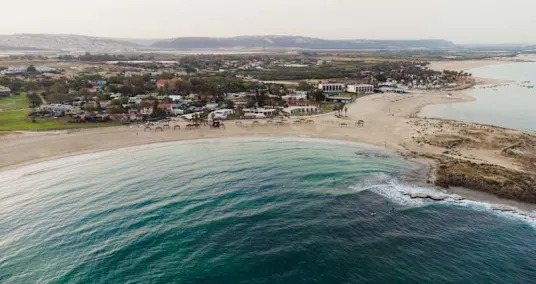
The discovery was made in an ancient shipwreck in the Dor Lagoon near the Carmel Coast, where archaeologists recovered nine pieces of unprocessed iron known as “blooms.”
Researchers from the University of Haifa said Wednesday that an underwater excavation off Israel’s northern Mediterranean coast uncovered what they described as the earliest known cargo of raw iron transported by ship, dating back around 2,600 years, Xinhua reported.
The discovery was made in an ancient shipwreck in the Dor Lagoon near the Carmel Coast, where archaeologists recovered nine pieces of unprocessed iron known as “blooms.” According to the university, the find provides direct evidence of how iron was transported in its earliest commercial stages.
The material was preserved in its original form, having solidified directly in a smelting furnace without undergoing forging or further refinement. Researchers said this distinguishes the cargo from later iron artifacts that typically show signs of shaping or tool-making.
Unlike copper and bronze, which could be melted into liquid form in ancient production processes, iron was heated with charcoal to produce a solid, porous mass. That mass was generally hammered to remove impurities and create denser material suitable for tools and implements.
The recovered blooms showed no indication of that secondary processing stage, suggesting they were transported immediately after production.

Earliest iron shipment discovered in ancient Mediterranean wreck
To determine the age and condition of the cargo, researchers conducted microscopic and chemical analyses.
Radiocarbon dating was also carried out on charred wood embedded in one of the pieces, helping confirm the timeline of the shipment. The findings were published in the journal Heritage Science.
Researchers said the cargo indicates that iron was being moved in raw form from production sites to other locations for further processing, pointing to a level of specialization in ancient manufacturing and trade networks in the Mediterranean.
The University of Haifa said the discovery provides new insight into early iron production and distribution practices in the region.
LATEST POSTS
- 1
 The most effective method to Recuperate After a Dental Embed Strategy: A Far reaching Guide
 - 24 Jeep Models: Dominating Execution and Flexibility for Each Experience
- 3Massive supernova explosion may have created a binary black hole
- 4'Euphoria' releases Season 3 photos with Zendaya, Sydney Sweeney, Jacob Elordi and others: See them
- 5My Pioneering Excursion: Building a Startup


- Fundamental Home Exercise center Hardware: Amplify Your Exercises
- Game theory explains why reasonable parents make vaccine choices that fuel outbreaks
- Instructions to Upgrade the Proficiency of Your Sunlight powered chargers
- Eight Muslim nations condemn Israel's 'dangerous' new death penalty law
- Why haven’t humans been back to the moon in over 50 years?
- Vote In favor of Your Favored Pet Consideration Administration
- Climate change is straining Alaska's Arctic. A new mining road may push the region past the brink
- 6 Pet Sitting Administrations for Your Cherished Pets
- Scientists train to dive beneath polar ice as climate change warms the Arctic and Antarctica