Baingz
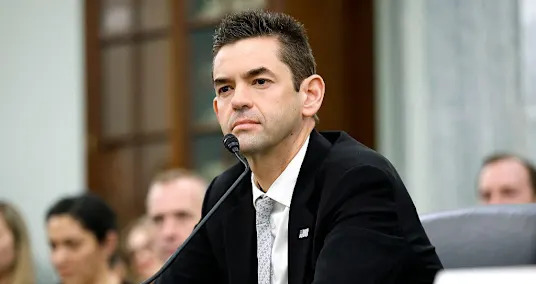
The following is the full transcript of an interview with NASA Administrator Jared Isaacman that aired on "Face the Nation with Margaret Brennan" on April 5, 2026, moderated this week by senior White House and political correspondent Ed O'Keefe.
ED O'KEEFE: This morning, the Artemis II crew is closer to the moon than ever before. Here's a look at the exterior of the Orion capsule this morning. The four astronauts inside are prepping a six hour fly by around the far side of the moon tomorrow. For an update, we go now to NASA Administrator, Jared Isaacman, who is inside Houston's Mission Control. Administrator, thank you so much for being here with us. The four astronauts on board are roughly halfway through their mission now. What, in your view, is the most critical moment of the next 24 to 48 hours?
JARED ISAACMAN, NASA ADMINISTRATOR: Well, I would say, and first good morning, Happy Easter, Ed. The primary objective right now for this phase of the mission is continuing to gather data from the ECLSS system, the life support system on the Orion spacecraft. This is the first time we've ever had humans on board the Orion spacecraft. We want to gather as much data as we possibly can for that. Of course, there's various science experiments, there's lunar observations, but learning as much as we can about Orion is critically important, because Artemis III is a year away. That's where we're going to test the same spacecraft with our lunar landers, followed up in 2028 by Artemis IV, where we're going to use this spacecraft transfer crew to the landers and put American astronauts back on the surface of the moon.
ED O'KEEFE: You make a good point. This is a test mission, and it's testing as much the, the vessel that they're in, as much as what they're looking for, but they are going to have to spend some time on Monday, essentially looking out the windows and looking for parts of the moon that we essentially have not really seen before. What specifically are they looking for?
ISAACMAN: Well, I would have to say, after a 250,000 mile journey away from Earth to the far side of the moon, it would be pretty hard to keep them away from, from those windows, but they
ED O'KEEFE: Absolutely--
ISAACMAN: – absolutely have observation responsibilities on that. They have a series of different cameras. They're going to get data from that for sure, they've actually had an opportunity for three and a half years to train for this mission, to work with our scientists on the information they would like to gather most about the far side of the moon. But all of this comes together to inform subsequent missions like Artemis III, but most importantly now Artemis IV, which is where we're going to actually get those astronauts back to the surface.
ED O'KEEFE: Yeah, to your point, you want to land one and possibly two missions on the moon just two years from now, NASA hired SpaceX and Blue Origin to build the lunar landers that will deliver astronauts to the surface of the moon. What are you doing to ensure that at least one of those two companies is going to be ready to do that?
ISAACMAN: Well, I'll tell you, we're doing a lot of things different over the last couple months, right? I mean, President Trump gave me a national space policy that called for America's return to the moon with frequency, to establish an enduring presence, to build the moon base and do other exciting things, like nuclear power and propulsion. And we got $10 billion worth of resources out of the "One Big, Beautiful Bill," the working family tax cut act. Now we are actually going to work. We are taking NASA subject matter experts, and we are embedding them across the supply chain, every prime contractor, subcontractor, every component on the critical path, from the rocket itself to the landers to the suits that astronauts will need to wear on the surface of the moon. And we are driving outcomes, we are not going to be passive anymore. We're not going to let budgets - you know get over budget or behind schedule, not when there's so much at stake when it comes to America's return to the moon. So we are driving outcomes, and that certainly includes the lunar landers.
ED O'KEEFE: Quickly then how does a budget, proposed budget cut of more than 20% potentially affect these plans?
ISAACMAN: Yeah, so I certainly support President Trump and, and his 2027 budget request. Look, we have a 20- we have 26 appropriations. We have $10 billion in supplemental funding that came out of the, President Trump's signature legislation, the working family tax cut act. I mean, this is the biggest in-, you know, supplemental investment in NASA since the Kennedy era. These resources are the only reason we can accelerate production to get to the moon, to add a mission in '27 which is Artemis III, to build the moon base and do all the other things, like launching the first interplanetary nuclear powered spacecraft in 2028 that's going to go past Mars, release a bunch of copters and a whole lot of other science missions. I think the, the American public and the taxpayers should be judging NASA based on outcomes, and not how quickly we can spend money every year.
ED O'KEEFE: In 20 seconds or less as they pass on the other side of the moon tomorrow for about 40 minutes. What's going to- what are you going to be thinking about as the astronauts do that?
ISAACMAN: Well, I got to tell you, people have been asking me questions about the, you know, the loss of comms as we go around the moon. That is something we're very used to in space flight mission control. As you said, astronauts are used to that as they go through training. So less about the loss of comm on the far side of the Moon. I'm always going to be thinking about the life support systems on the vehicle, because it's a test mission. But I'll tell you, most importantly, I'm thinking about the thermal protection systems, and when these astronauts are under parachute safely in the water so we can get them back to their families.
ED O'KEEFE: Administrator Jared Isaacman in Houston, thank you so much for joining us on this Easter Sunday. We appreciate it. And that is it for us today. Thank you for watching, Margaret, will be back next Sunday until the end for Face the Nation. I'm Ed O'Keefe.
Lawmakers react to White House's massive defense spending proposal
FBI arrests suspected Unabomber in Montana (1996)
Former CIA Director David Petraeus lauds Ukraine's "extraordinary innovation" in war with Russia
Latest Articles
- 1
 Understanding Successful Compromise Standards to Cultivate Agreeable Connections
 - 2Woman leaves bachelorette trip after trusting her gut about sketchy men partying it up with friends
- 3Significant Elements to Consider Prior to Applying for a Mastercard: 6 Vital Contemplations
- 4Netanyahu vows to ‘return Negev to Israel,’ pledges settlement growth during visit
- 5'Something Very Bad Is Going to Happen' is the Duffer Brothers' first project since 'Stranger Things.' It's also 'wildly insane.'





Related Articles